
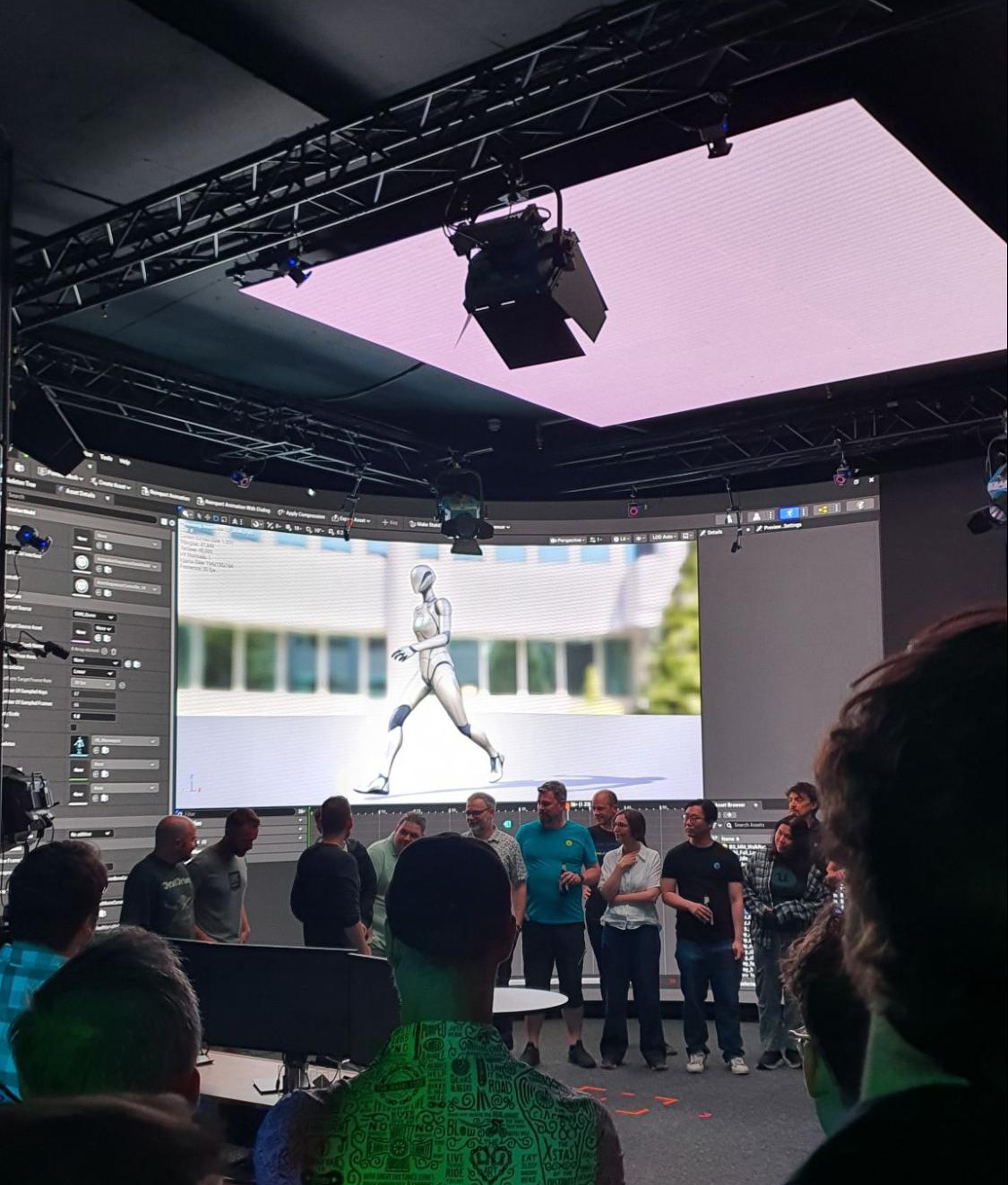
In May 2025, I went to Unreal: Meet the Rigging and Animation Team and came away with several feature previews. The direction was clear: Epic was pushing hard towards animation produced directly inside Unreal Engine, without relying on Maya.
Parts of the team were already using Control Rig—and nothing else—on several Epic projects, which largely meant Fortnite work.

Coming in Unreal Engine 5.6
The roadmap included a broad animation UX overhaul: improvements to animation layers, constraints, motion trails, gizmos and the Animation Outliner, together with tools for recording animation live.
The aim was to let people build tools for animation in much the same way they build tools for game development.
Rig overrides and retargeting
An experimental global override system was being developed alongside version control. It began with cosmetic changes—colours, shapes, names and display labels—but the longer term plan was to rename or alter a rig and propagate those changes through Blueprints and Control Rig, rather than diving into each asset and rebuilding it manually.
The retargeter was also being revised for greater flexibility. The previews included facial retargeting through curve transfer and more options for unsupported skeletons, such as translating a human biped walk into a dragon quadruped walk. An unannounced project was already leaning heavily on live retargeting.
Control Rig with physics
Control Rig with physics was presented as a major keystone. In one example, the animator keyed a character's hands and the main up-and-down motion for a push-up, then allowed physics to produce the remaining secondary action.
The simulation settings could also be keyed to reduce or increase their intensity. Control Rig generally runs through one node per rig, keeping the workflow responsive.
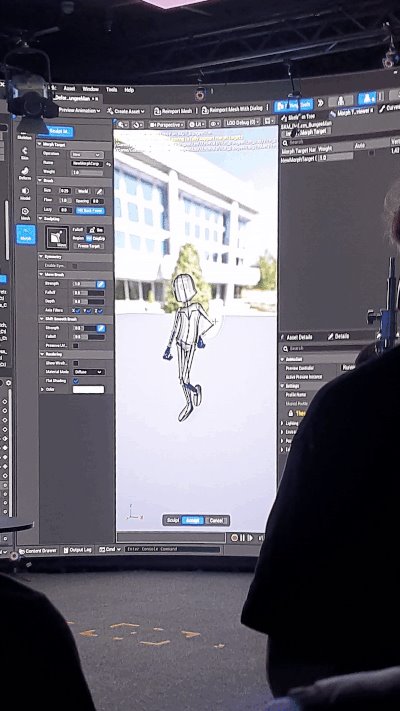
New and continuing tools
Morph Target Editing Tools
Corrective morph targets were beginning to appear as a plugin. It was not yet a complete workflow, but it already included a brush for making corrections, publishing them as targets and setting rules by angle, rig or motion.
Geometry Cache Sequence Level Baker
The Sequencer could now bake geometry caches, including animation driven by physics or direct mouse input, with morph targets and deformers preserved in a USD export. The obvious audience was Houdini artists who needed a final cached version of an object or character for VFX work.
Dynamic hierarchy
The existing dynamic-hierarchy work was continuing too. One demonstration used a robot with six alternative rigs and a keyed option that changed the complete hierarchy on the fly, turning four limbs into a tail.
I would strongly recommend attending the next one. Free ice cream and cocktails were involved because of the heat. Unreal, indeed.